
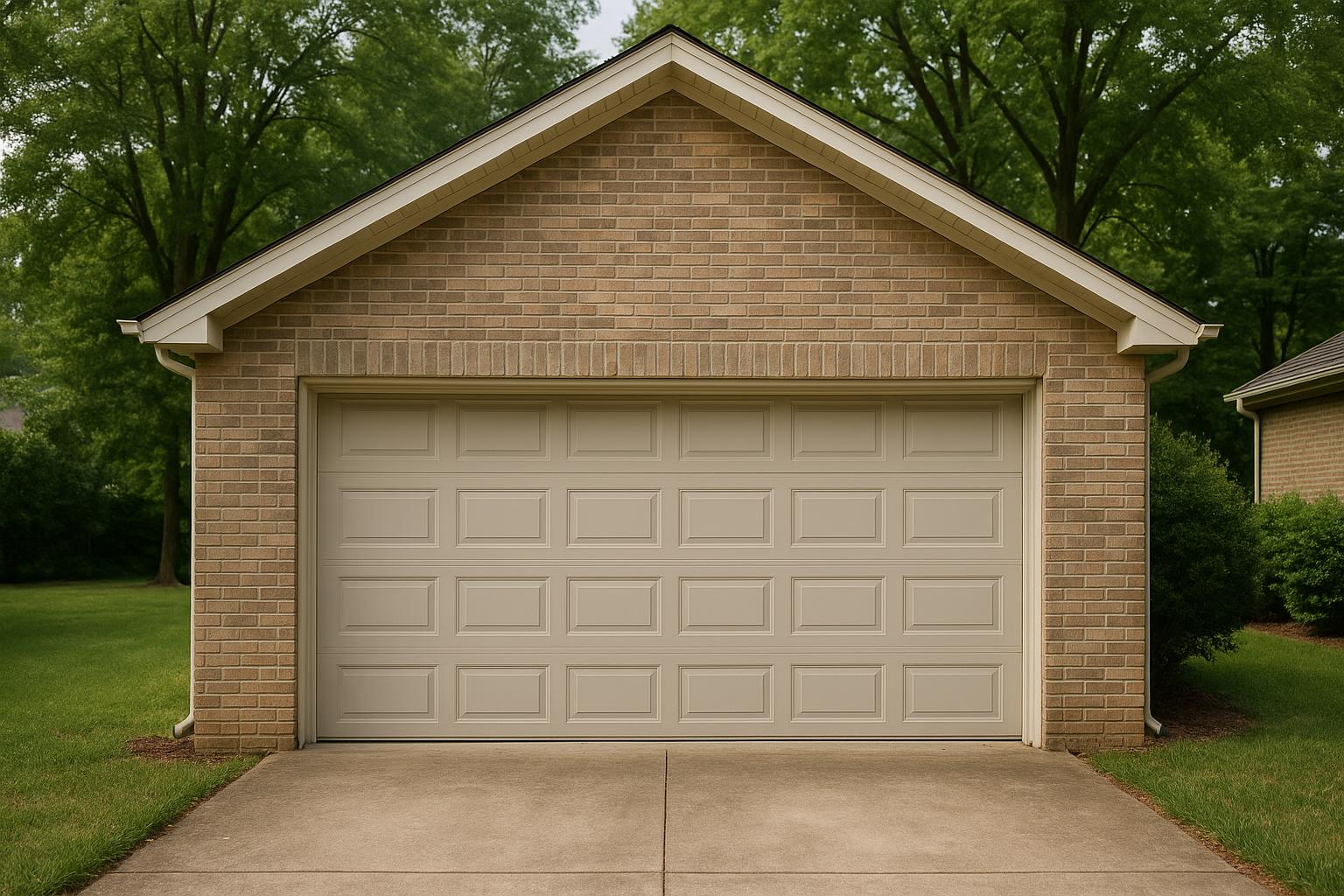
When Your Garage Door Stops Working, Don't Panic
You're running late for work, you press the button on your garage door opener, and nothing happens. Or maybe the door starts to close and then reverses for no apparent reason. Few household problems are as immediately frustrating as a garage door that won't cooperate.
For homeowners in Tullahoma and the surrounding area, a malfunctioning garage door isn't just an inconvenience — it can be a security risk and a safety hazard. Before you assume the worst, though, many of the most common causes are surprisingly simple. Let's walk through what might be going on and what you can do about it.
Check the Obvious Things First
It might sound too simple, but the first thing to do is rule out the basics. You'd be surprised how often the solution is something small that got overlooked in the rush of daily life.
- Dead remote batteries: If your wall-mounted button works but your remote doesn't, swap in fresh batteries before doing anything else.
- Power source: Make sure the garage door opener is plugged in. A cord can get bumped loose, or a breaker can trip — especially during storms, which we get our fair share of here in Middle Tennessee.
- Lock mode: Some openers have a lock or vacation mode that disables the remote. Check your opener's manual to see if this feature was accidentally activated.
If none of these solve the problem, it's time to look a little deeper.
The Photo-Eye Sensors May Be Misaligned
Modern garage doors are equipped with photo-eye sensors near the bottom of the door tracks on both sides. These sensors send an invisible beam across the opening, and if anything breaks that beam — a bike, a trash can, a leaf — the door will refuse to close or will reverse immediately after starting to close.
Here's what to check:
- Make sure nothing is physically blocking the sensors.
- Wipe the sensor lenses with a soft cloth. Dust, cobwebs, and moisture can interfere with the beam.
- Check that both sensors are aligned and facing each other directly. A small bump can knock one out of position. Most sensors have a small LED indicator — if one is blinking instead of steady, it's likely misaligned.
Realigning the sensors is usually a straightforward fix, but if the wiring is damaged or the sensors need replacement, that's a job for a trained technician.
The Tracks Could Be Obstructed or Damaged
Your garage door rides along metal tracks on either side. If those tracks are bent, dented, or have debris lodged in them, the door can get stuck partway or refuse to move at all.
Visually inspect the tracks from top to bottom. Look for:
- Visible bends or dents in the metal
- Gaps between the track and the wall
- Dirt, leaves, or small objects caught in the track
Minor debris can be cleared out carefully, but if the tracks are bent or misaligned, don't try to force the door. Forcing a door along damaged tracks can cause further damage to the door panels and the opener mechanism. This is one of those situations where calling a professional will save you money in the long run.
Broken Springs or Cables
If you hear a loud bang from your garage and then the door won't open, there's a good chance a torsion spring has snapped. Springs are under extreme tension — they do the heavy lifting every time your door opens and closes. When one breaks, the opener usually can't handle the full weight of the door on its own.
This is not a DIY repair. Garage door springs are one of the most dangerous components in your home to work with. Attempting to replace them without proper tools and training can result in serious injury. If you suspect a broken spring or cable, keep the door closed and call a qualified garage door technician right away.
Your Opener May Need Attention
Sometimes the door itself is fine, but the opener is the problem. Garage door openers are mechanical devices with motors, gears, and circuit boards — all of which can wear out over time. Signs that your opener may be failing include:
- The motor runs but the door doesn't move
- The door moves partway and then stops
- You hear grinding or humming from the motor unit
- The opener works intermittently
If your opener is more than 10 to 15 years old, it may be nearing the end of its useful life. Newer models offer better reliability, quieter operation, and modern features like smartphone connectivity and battery backup — a real advantage during power outages.
Weather and Seasonal Factors in Tullahoma
Living in Tullahoma means dealing with humidity in the summer and cold snaps in the winter, both of which can affect your garage door's performance. Metal components expand and contract with temperature changes, lubricant can dry out or thicken, and weatherstripping can harden and crack over time.
If your door seems to stick or struggle more during certain seasons, it may benefit from a maintenance tune-up. Regular lubrication of the rollers, hinges, and springs, along with an inspection of the weatherstripping and hardware, can prevent many seasonal issues before they turn into bigger problems.
When to Call a Professional
Some garage door issues are safe and simple enough to troubleshoot on your own — dead batteries, dirty sensors, small obstructions. But many problems involve components that are under high tension or connected to electrical systems, and those should always be handled by a trained technician.
Call a professional if:
- A spring or cable appears broken
- The door is visibly off its tracks
- The opener motor runs but nothing moves
- You've tried basic troubleshooting and the problem persists
- The door feels unusually heavy when you try to lift it manually
At Tullahoma Garage Door, we serve homeowners and businesses across Tullahoma, Manchester, Shelbyville, Lynchburg, Winchester, and Estill Springs. We show up on time, diagnose the problem honestly, and get your door working again as quickly as possible.
Don't Let a Stuck Door Ruin Your Day
A garage door that won't open or close is more than a hassle — it can leave your home vulnerable and your vehicles trapped. The good news is that most problems have straightforward solutions, whether it's a quick sensor adjustment or a professional repair.
If your garage door is giving you trouble and you're not sure what's causing it, give us a call. We're happy to help you figure it out and get things back on track — literally.