
The Part You Never Think About — Until It Breaks
Your garage door is probably the largest moving part of your home, and it goes up and down multiple times a day without you giving it a second thought. But behind that smooth, effortless motion is a set of tightly wound springs doing most of the heavy lifting — literally. These springs counterbalance the weight of the door, which can be anywhere from 130 to over 400 pounds depending on the material and size.
For homeowners in Tullahoma and the surrounding area, understanding when and why to replace garage door springs can save you from an unexpected breakdown, costly emergency repairs, or even a dangerous situation. Let's break down everything you need to know.
How Long Do Garage Door Springs Last?
Most standard garage door springs are rated for approximately 10,000 cycles. One cycle equals one full open and one full close. If your household opens and closes the garage door four times a day, that adds up to roughly 1,460 cycles per year — meaning your springs could last about seven to nine years under normal use.
However, several factors can shorten or extend that lifespan:
- Frequency of use: Families that use the garage as a primary entrance may cycle the door six to eight times daily, cutting spring life significantly.
- Climate and humidity: Tennessee's humid summers and cold winter snaps cause metal to expand and contract, which can accelerate wear and corrosion over time.
- Maintenance habits: Springs that are regularly lubricated and inspected tend to last longer than neglected ones.
- Spring quality: Higher-cycle springs (rated for 20,000 or even 50,000 cycles) are available and can be a smart long-term investment.
Types of Garage Door Springs
There are two main types of springs used in residential garage doors, and knowing which type you have helps you understand what replacement involves.
Torsion Springs
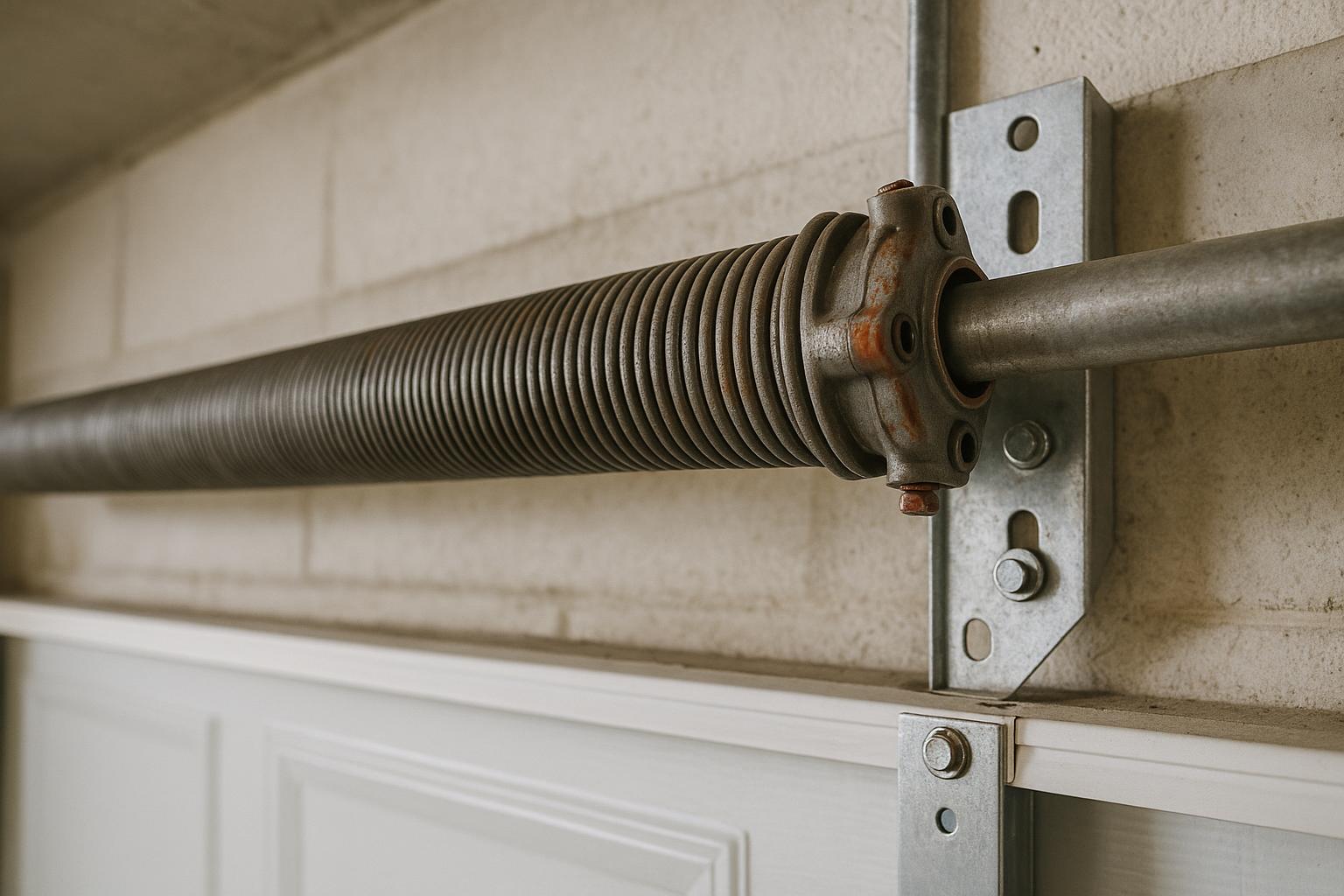
Torsion springs are mounted horizontally above the garage door opening. They use torque to lift the door and are the more common type found in modern garage door systems. Most residential doors use one or two torsion springs. These springs provide smoother, more controlled movement and tend to last longer than extension springs.
Extension Springs
Extension springs run along the horizontal tracks on either side of the door. They stretch and contract to provide lifting force. Extension springs are more common on older or lighter garage doors. They typically include safety cables that run through the center of the spring to prevent the spring from becoming a projectile if it breaks.
Both types are under extreme tension, which is why spring replacement is one of those jobs best left to trained professionals.
Warning Signs Your Springs Are Wearing Out
Springs rarely fail without giving some warning signs first. Here's what to watch for:
- The door feels heavy when lifted manually: If you disconnect the opener and try to lift the door by hand, it should move relatively easily. A door that feels extremely heavy likely has weakened or broken springs.
- The door opens only partway: When springs lose tension, the opener may struggle to lift the full weight of the door, causing it to stop short or reverse.
- Visible gaps in the spring coils: A broken torsion spring will have a visible gap where the coil has separated. This is one of the most obvious signs.
- The door slams shut quickly: Without proper spring tension to control the descent, a closing door can come down faster than it should — a serious safety hazard.
- The opener strains or stops working: Your garage door opener is designed to handle a balanced door. When springs fail, the opener takes on weight it wasn't built for, which can burn out the motor.
- Crooked or uneven movement: If one spring breaks or weakens before the other, the door may tilt to one side as it moves.
Can You Replace Garage Door Springs Yourself?
We understand the DIY spirit — many homeowners in Tullahoma take pride in handling projects around the house. But garage door spring replacement is genuinely one of the most dangerous home repairs you can attempt. Torsion springs store an enormous amount of energy, and an improper release can cause serious injury or property damage.
Professional technicians have the specialized tools, training, and experience to replace springs safely and efficiently. They also ensure the new springs are properly sized and calibrated for your specific door, which affects everything from balance to opener longevity.
What to Expect During a Professional Spring Replacement
When you call a professional garage door service for spring replacement, here's what the process typically looks like:
- Inspection: The technician examines the current springs, cables, drums, and overall door balance to assess the full scope of work needed.
- Spring removal: The old springs are carefully unwound and removed using professional winding bars and safety equipment.
- New spring installation: Replacement springs are installed and wound to the correct tension based on the door's weight and size.
- Balance testing: The door is tested manually and with the opener to ensure smooth, balanced operation.
- Safety check: Cables, brackets, and hardware are inspected and tightened as needed. The technician will also test the auto-reverse safety features on the opener.
The entire process usually takes about an hour for a standard residential door.
Should You Replace Both Springs at Once?
If your garage door uses two springs and only one has broken, you might wonder whether it's worth replacing both. The short answer is yes. Both springs were installed at the same time and have endured the same number of cycles, so the second spring is likely near the end of its life as well. Replacing both at once saves you from a second service call in the near future and ensures even tension on both sides of the door.
Extending the Life of Your Garage Door Springs
While springs will eventually wear out no matter what, regular maintenance can help you get the most out of them:
- Lubricate springs every few months with a silicone-based garage door lubricant. This reduces friction and helps prevent rust.
- Schedule annual maintenance inspections to catch early signs of wear before a full failure occurs.
- Keep the door balanced. If you notice the door drifting up or down when left halfway open, the springs may need adjustment.
- Consider upgrading to high-cycle springs if you use your garage door frequently. The upfront cost is higher, but the extended lifespan often makes it worthwhile.
Tullahoma Garage Door Is Here When You Need Us
Whether you've just discovered a broken spring or you want to get ahead of the problem with a maintenance visit, Tullahoma Garage Door is ready to help. We serve homeowners and businesses throughout Tullahoma, Manchester, Shelbyville, Lynchburg, Winchester, and Estill Springs with honest, dependable garage door service.
We show up on time, explain what needs to be done, and get your door working safely again — no surprises and no pressure. If your garage door springs are giving you trouble, give us a call and let's take care of it before a small issue becomes a big one.